
Quick take
If visitors are landing on the site but not contacting you, the issue is usually not more traffic. It is the clarity of the next step and what happens right after the form.
If someone visits the site, likes what they see, and still does not take action, the issue is often structure. The page may look acceptable, but the next step is weak, unclear, or too easy to ignore.
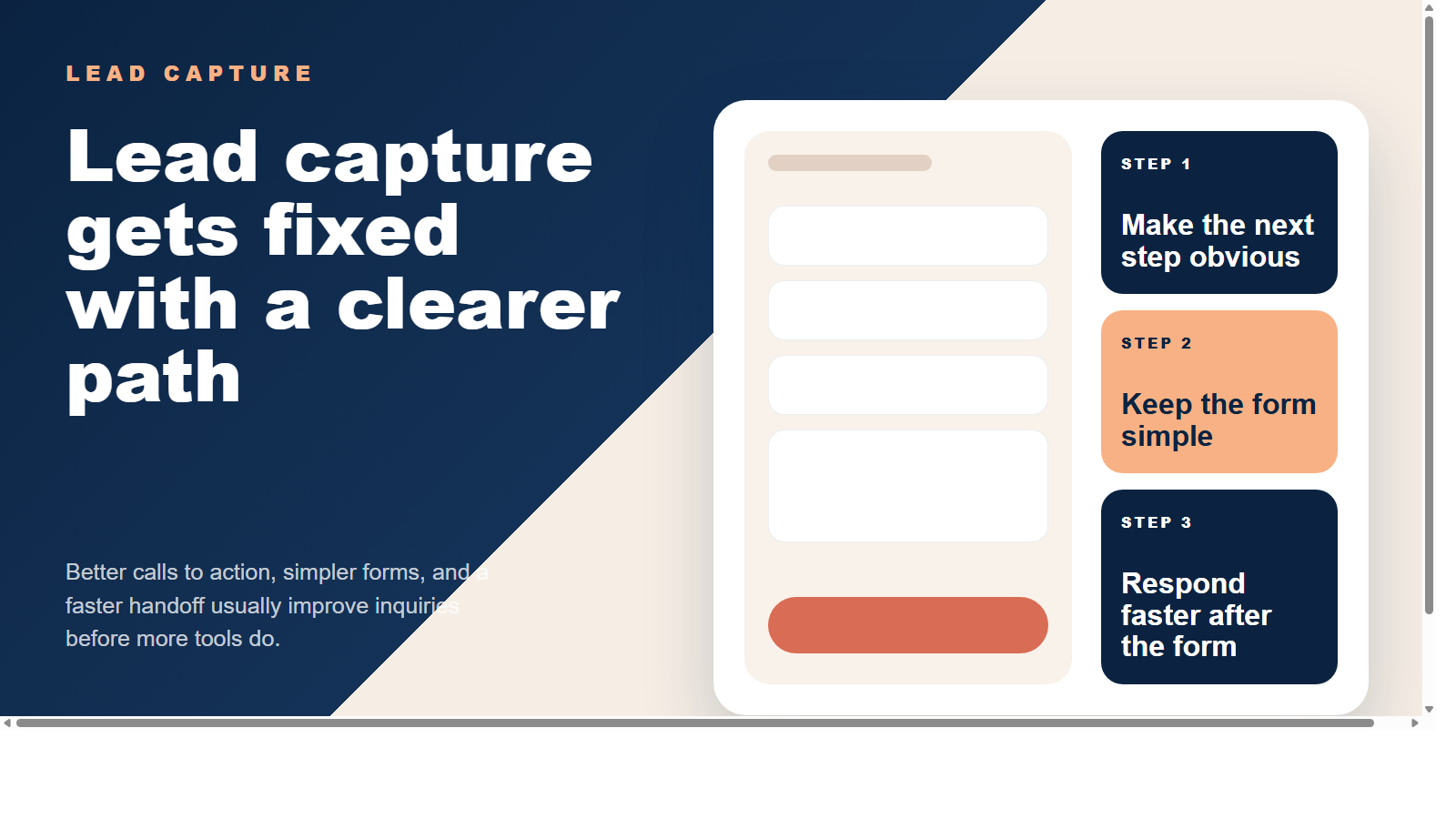
Make the path obvious
The site should not rely on a tiny contact link buried in the menu. Better lead capture usually comes from a few simple moves:
- clear calls to action in the hero and key sections
- contact options that feel easy and low-friction
- forms that ask only what matters
- booking links when a fast next step makes sense
Fix the handoff after the form
Even when leads come in, many agents still lose momentum because the response feels slow or manual. This is where a simple lead-flow setup can help. The goal is not to turn the website into a huge software stack. The goal is simply to make sure the lead gets a quick response and lands in the right place.
When a simple lead-flow setup is enough
- instant email reply after form submission
- booking workflow connection
- lead tagging or CRM handoff
- a simple nurture step if needed
This is why the offer is framed as an add-on, not the starting point. First fix the website foundation. Then improve the response flow when the business is ready for it.
What to review first
If your lead capture feels weak, review the homepage messaging, CTA placement, form simplicity, and what happens immediately after submission. Those four areas usually reveal the biggest opportunities fastest.
Next step
If inquiry flow feels weak, fix the website path before adding complexity.
Clearer calls to action, simpler forms, and faster follow-up usually matter more than turning the site into a heavy automation stack too early.