
Quick take
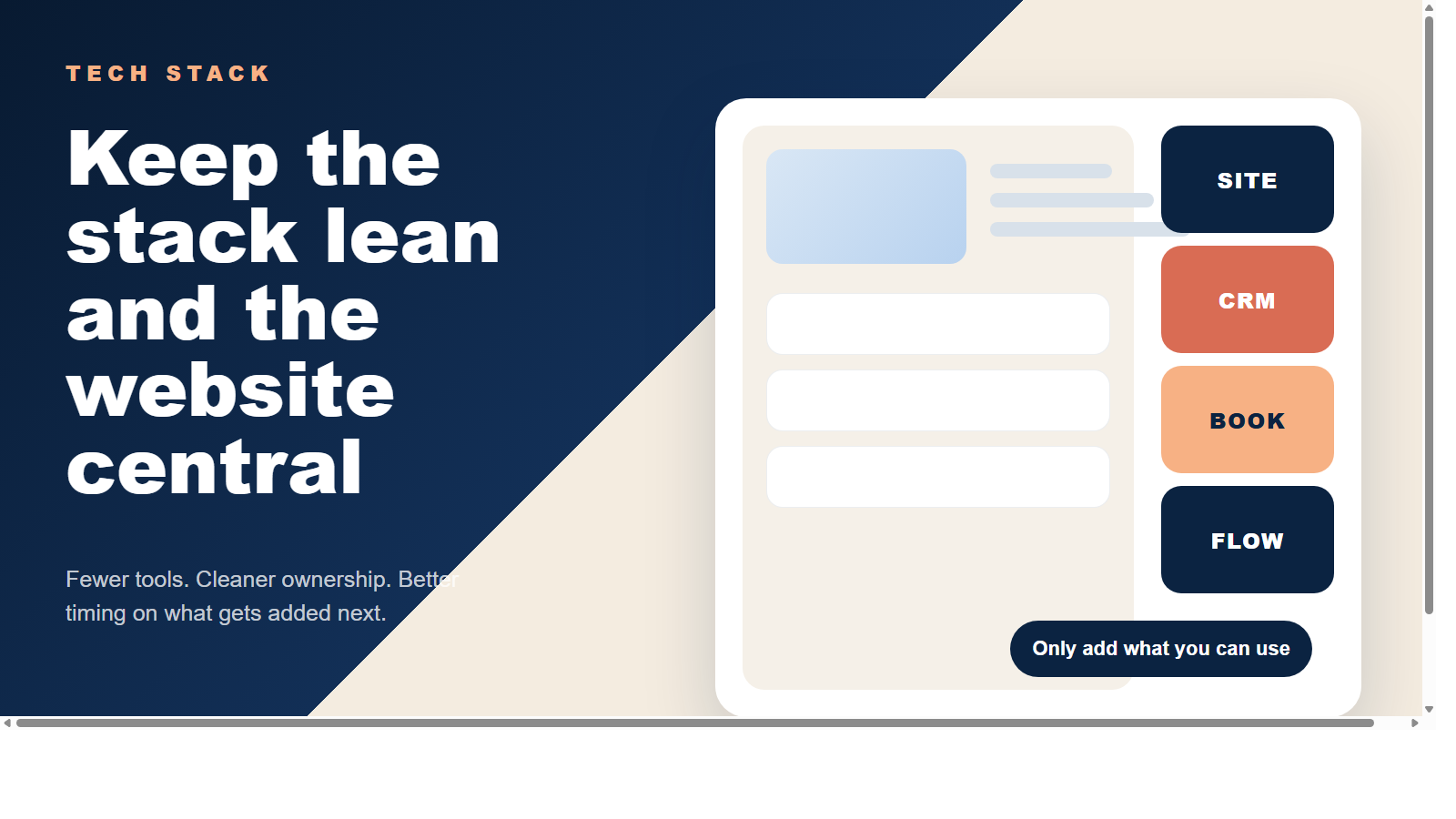
A lean stack works best when the website stays central, the client owns the software, and extra tools only get added when there is a clear reason. That keeps the system cheaper, cleaner, and easier to manage.
Solo agents hear a lot of software advice. Add a CRM. Add IDX. Add automation. Add lead routing. Add texting. Add another dashboard. Sometimes those tools help. Often they arrive before the website foundation is clear enough to justify them.
The better approach is usually leaner. Start with the website, the contact path, and a simple follow-up flow. Then add more only when the business stage makes it worthwhile.
What the core stack usually looks like
- a solid website that explains the brand clearly
- a form that actually routes inquiries reliably
- a calendar or simple contact path if that fits the sales process
- a CRM only if leads are active enough to need one
- local pages or SEO structure before heavier automation
What gets added too early
IDX can be useful, but not every solo agent needs it immediately. Complex automation can help, but only if there is already enough lead flow to manage. Paying for multiple tools before the website is doing its job often creates cost without enough return.
This is why the client-owned stack model matters. The business owns the accounts and costs. AgentPavilion focuses on setup, integration, and execution. That keeps the structure cleaner and avoids turning the website into an expensive pile of subscriptions.
Why lean usually performs better
Lean systems are easier to understand and easier to maintain. There are fewer moving parts, fewer points of failure, and less confusion about what needs to happen next. That matters for solo operators who do not want to become full-time software managers.
The site should create trust. The inquiry path should be clear. The follow-up system should be simple enough to keep using. That combination beats an overbuilt stack in most early and mid-stage cases.
When it makes sense to add more
Add more tools when there is evidence for them. More recurring leads. More manual admin than you can comfortably handle. Strong local visibility that now needs better organization. If the pressure is real, the next tool is easier to justify.
Until then, a lean stack is not a compromise. It is often the more strategic choice.
The bottom line
The best stack is not the one with the most features. It is the one the business can actually use. For most solo agents, that means staying website-first, cost-aware, and selective about what gets added next.
Next step
If the stack already feels messy, the answer is usually not another tool.
The audit can help identify what you actually need now, what can wait, and what is making the current setup heavier than it should be.