
Quick take
Local area pages do more than target keywords. They make the website feel more believable. They create context, help search engines understand the service area, and give real visitors a clearer reason to trust the agent.
One of the easiest ways for an agent website to feel generic is when it talks about a whole market without ever getting specific. A visitor may know you work in the area, but that is not the same as feeling that you know the place.
Local area pages help close that gap. They give the website a place to talk about neighborhoods, community differences, common buyer or seller questions, and the kind of local detail that generic websites usually miss.
Why local area pages work
They make the site more believable. Instead of one broad service page trying to do everything, the website starts showing its local logic. This helps two audiences at the same time: real visitors and search systems.
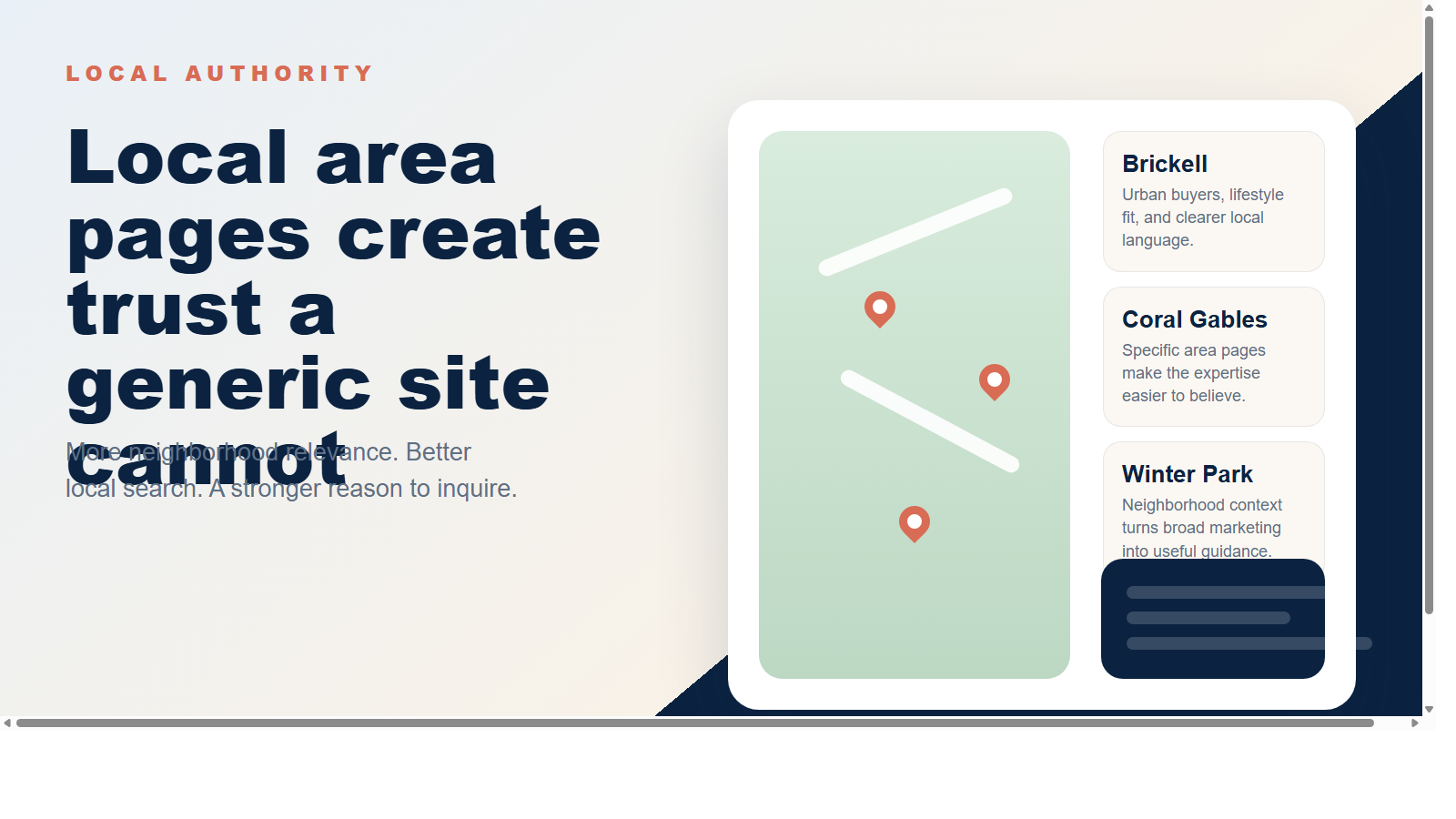
A buyer looking at Brickell or Winter Park wants signs that the agent understands that kind of area. A local page gives you space to show that in a cleaner, more relevant way.
What a good local page should include
- a short introduction to the area
- the kind of buyer or seller questions that come up there
- the style of homes, pace, or lifestyle the area is known for
- an honest explanation of who the page is useful for
- a clear next step if someone wants help there
This is not about spammy doorway pages
Bad area pages all sound the same. They swap city names and offer no real value. Strong area pages do the opposite. They feel specific. They help someone understand a place better. They support a real service area instead of pretending to cover everything.
That is one reason local pages fit the AgentPavilion model well. They are useful for SEO, but they are also useful for trust. They show local intent without pushing the site into heavy software territory.
Why this matters more than a generic website
A generic website can still look nice, but it often lacks depth. It does not give the visitor much reason to believe that this agent understands their area better than the next person. Local pages change that. They make the website feel more grounded and more credible.
For solo agents, that credibility matters. You are often not competing on size. You are competing on clarity, trust, and relevance.
The bottom line
If the site feels broad and forgettable, local pages are one of the most practical upgrades you can make. They help the business feel more anchored, more local, and easier to choose.
Next step
If the website feels broad, local pages are often the fastest trust upgrade.
The audit can show where local relevance is missing and which page direction would make the website feel more grounded first.