
Quick take
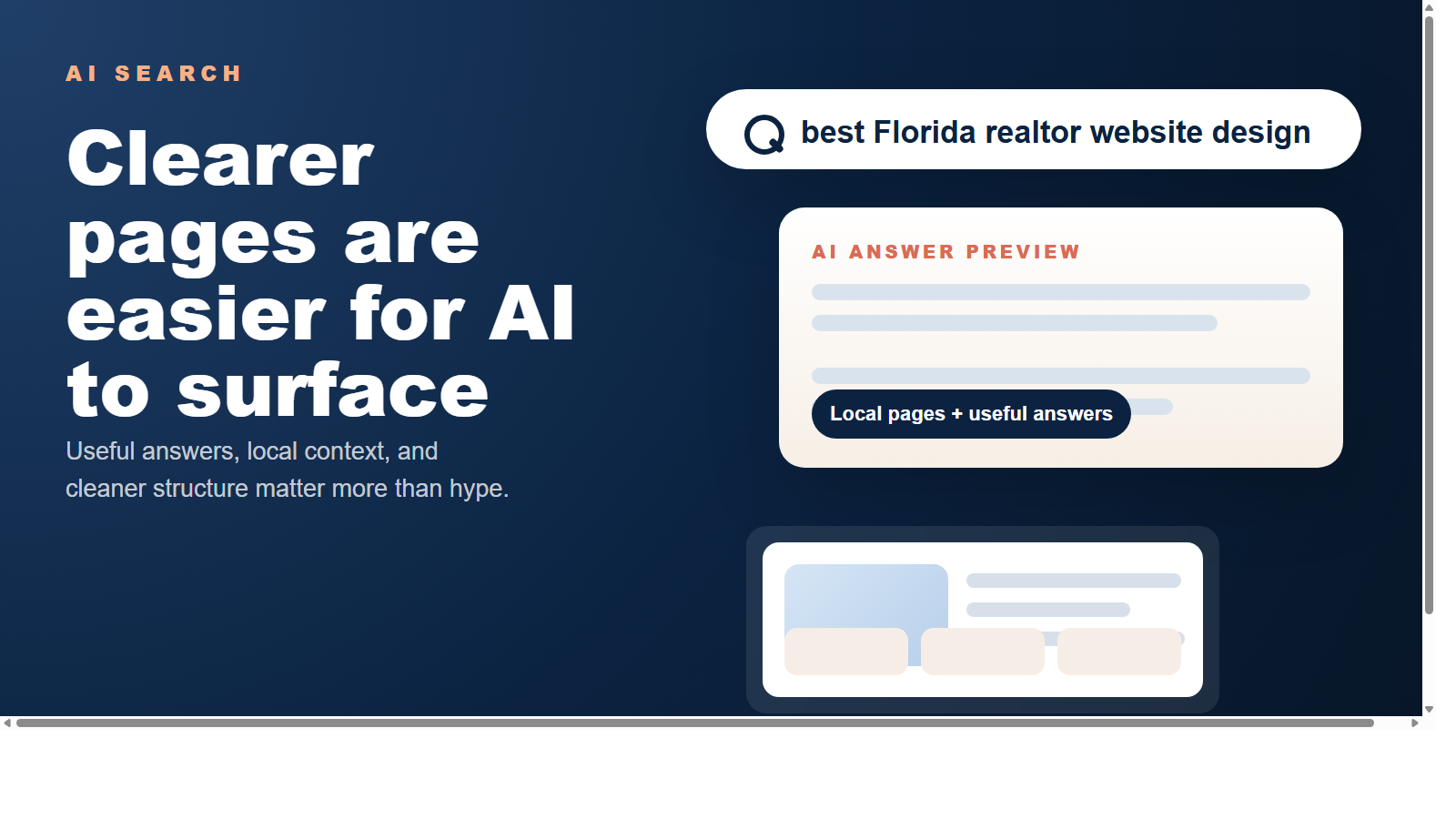
Florida real estate agents do not need to chase every new AI feature. They need pages that are easier to crawl, easier to summarize, and clearly connected to specific services, locations, and pain points.
More real estate search behavior is starting to pass through AI-assisted interfaces. That does not mean classic search is gone. It means websites are being judged a little differently. Pages that feel vague, thin, or disconnected are harder for these systems to reuse or recommend.
For solo agents, that is actually good news. You do not need a massive brand to become easier to find. You need clearer pages, stronger internal linking, and content that answers real questions cleanly.
AI search still needs clear source pages
Whether someone asks Google AI, Bing, or ChatGPT search, the system still needs usable source material. That means page titles, section headings, service explanations, and local pages should be written in a way that makes the purpose obvious.
If every page sounds broad, the site becomes harder to understand. If a page clearly covers Florida real estate website SEO, Miami real estate website design, or local area pages for solo agents, the topic is easier to match.
What usually helps visibility
- service pages with one clear job each
- city or area pages that feel genuinely local
- FAQs that answer narrow questions directly
- strong internal linking between related topics
- structured data and clean titles that support the page topic
What usually hurts visibility
Generic pages hurt more than many agents realize. A homepage that tries to speak to everyone, a blog with no topical focus, or location pages that all sound the same make the site weaker for both classic SEO and AI-driven discovery.
That is why the best move is often not more content. It is more useful structure. A smaller, tighter site usually performs better than a bigger, scattered one.
Why this matters for solo agents
Big brands can sometimes survive with vaguer content because they already have authority. Solo agents usually need clearer positioning. The site has to help a search system understand exactly what the business does and who it serves.
If you want to show up more often in AI-influenced results, write pages that feel easy to cite. Keep them specific. Keep them local. Keep them useful.
The bottom line
AI search is not a reason to panic. It is a reason to sharpen the site. Stronger service pages, better local relevance, cleaner headings, and clearer answers are the real play. Most solo agents can get there without building anything heavy.
Next step
If AI search is changing how people find answers, the site needs to become easier to understand.
The audit can show where your current structure is too broad, too thin, or too unclear for search systems and real visitors alike.